
Spades - Classic Card Game
FIOGONIA LIMITEDCard
4.716.58K Reviews
- Version
- 1.8.1
- Installs
- 5.00M
- Age Rating
- Everyone
Screenshots
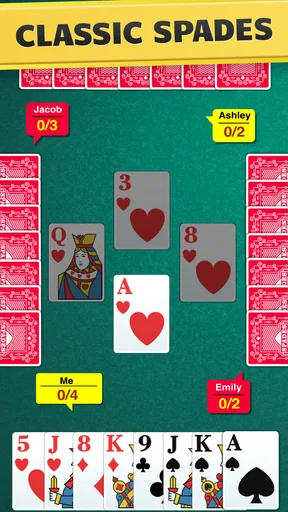
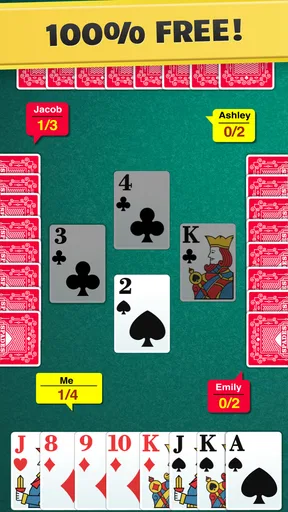
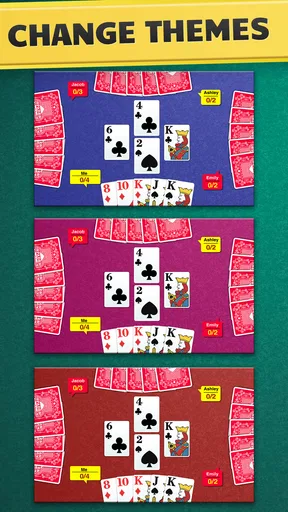
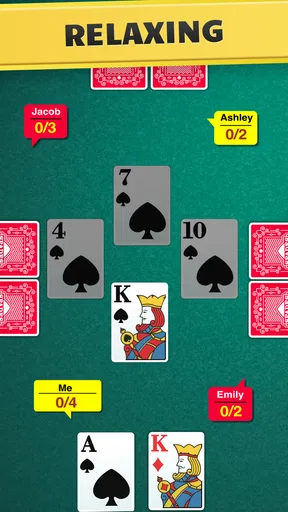
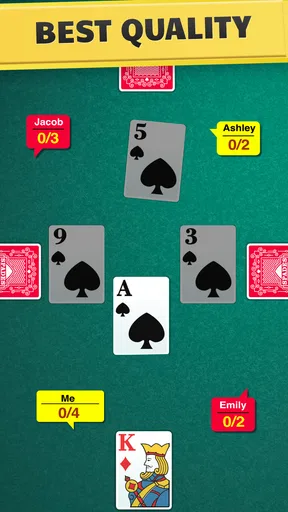
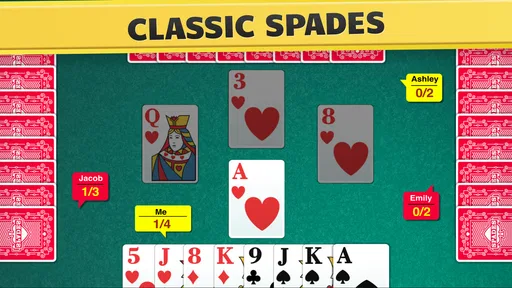
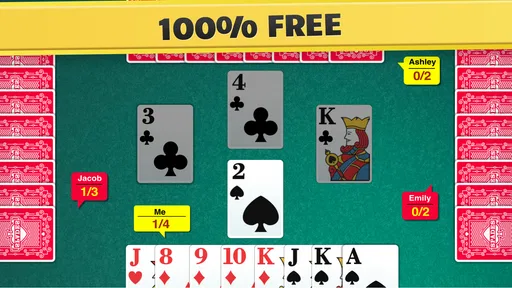
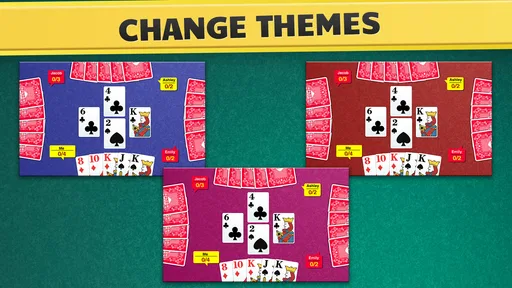
Our Review of Spades - Classic Card Game
 Analysis by Appyee
I approached Spades - Classic Card Game expecting a familiar trick-taking card game rather than a complicated mobile production, and that is exactly where its appeal lies. It is a focused way to play Spades on a phone or tablet, with the option to play online or offline, so I can use it for a quiet solo session or a quicker game when I have a few minutes to spare. The basic rules are recognizable, but the app still gives enough room for decision-making that a careless bid or badly timed high card can change the whole hand.
This is a free card game from FIOGONIA LIMITED, rated for Everyone. It has built a strong audience, with a 4.7 average from around 50 thousand ratings and more than a million installs. Those numbers do not replace personal experience, but they do suggest that the straightforward format works for a wide range of players. I found it most enjoyable when I treated it as a game of planning rather than a way to rush through random hands.
Getting comfortable with the game before chasing wins
For a first-time player, the most important thing to understand is that Spades is not simply about playing the highest card. Each hand begins with a bid: I estimate how many tricks I can take, and then I try to meet that estimate while working with my partner. Spades are special because they act as the trump suit, but they normally cannot be led until the suit has been broken. That rule creates much of the tension. I may hold a powerful spade, yet using it too early can waste an advantage that would have been more valuable later.
The app is best approached as a compact digital version of the traditional game. It does not need a long tutorial to explain every possible situation, but new players should slow down during their first hands and watch why a card wins. The useful question is not only “What can I play now?” but also “What cards have already disappeared, and what might my partner or opponents still hold?” That change in mindset is where the game starts feeling strategic.
Before installing, I would set expectations correctly. This is not a collectible card game, a story-driven adventure, or a fast arcade title. There is no reason to choose it if you want flashy progression or constant action. Its strength is the repeatable structure of bidding, following suit, counting tricks, and adjusting to imperfect information. I can finish a hand quickly, but a full session still rewards patience.
What the first launch feels like
The game is free to download, and its content rating makes it suitable for general audiences. The current version is 1.7.4, and it runs on devices using Android 7.0 or later. On a compatible device, I would begin by opening the game and looking for the most direct route into a match rather than changing every available option immediately. A new player learns more from one complete hand than from spending several minutes exploring menus.
Because the title supports online and offline play, it fits two different routines. When I am travelling or dealing with an unreliable connection, offline play is the practical choice. At home, online play can make the game feel more social and competitive. I would decide which mode suits the moment instead of assuming that one is always better. Offline play is more dependable, while online play is the natural choice when I want interaction beyond the device.
The first useful setup is simple: choose a game mode, make sure the cards and score are easy for me to read, and start with conservative bids. I do not need to prove that I understand Spades by calling an ambitious number immediately. A modest bid gives me room to observe how the app presents turns and how the opposing side responds. That is especially helpful for anyone who has played with physical cards but is unfamiliar with digital controls.
How I reach the first meaningful success
My recommended first goal is not winning the entire match. It is making a bid that I can realistically complete. I look at the strength of my hand, count likely winners, and remember that a long suit can be useful even when it contains no obvious top card. If I have several cards in one suit, I may be able to force opponents to spend their cards in that suit before my remaining cards become useful.
During the first trick, I pay close attention to the suit that is led. If I can follow suit, I do so; playing a different suit may not be legal unless I have no card in the led suit. When I cannot follow, I decide whether spending a spade is worth taking the trick. This is one of the first places where beginners can improve quickly: winning a trick is not automatically good if it pushes me beyond my bid or removes a spade that I needed to control a later trick.
A practical beginner routine is to keep three thoughts in mind. First, protect the number I bid instead of chasing every available trick. Second, notice when a suit has been exhausted from my hand, because that gives me opportunities to use a spade. Third, watch my partner’s plays for information. A partner who declines to spend a powerful card may be showing that they expect a later opportunity, while an unexpectedly high card can change how I should manage the rest of the hand.
One everyday scenario shows why the offline option matters. Imagine I am waiting for an appointment with only a short stretch of free time and no dependable signal. I can start a hand, focus on the bid, and play at my own pace without needing a table, a deck, or another person nearby. If I later have more time and want a different kind of challenge, I can switch to online play. That flexibility is more useful to me than a large collection of decorative extras would be.
Confusing moments that can cost a hand
The biggest early confusion is the difference between taking a trick and fulfilling a contract. If I bid three and take five, I have not necessarily played better than someone who bid five and took exactly five. Extra tricks can create penalties or unwanted bags depending on the scoring rules in use, so I try not to treat every trick as a prize. The app becomes much easier once I think in terms of the bid first and individual cards second.
Another common mistake is assuming that the highest card in the hand will always win. A high card loses when an opponent plays a higher card in the same suit, and any legal spade can beat a non-spade card once spades are in play. I therefore avoid spending a strong card simply because it looks impressive. Sometimes the correct move is to play a low card, let another player take the trick, and preserve my control for a more important moment.
New players can also misread the partner relationship. The player beside me is not an opponent, so I should not compete with that player for every trick. If my partner has already shown control of a suit, I can use my turn to support the overall bid rather than taking over. That may mean allowing a partner’s winner to stand or discarding safely when I have no card in the led suit.
There is also a mental trap in online play: treating every slow or unexpected move as a sign that the game is malfunctioning. Card games involve incomplete information, and a move that looks strange may be an attempt to protect a later trick. I find it better to judge the decision after the hand ends, when I can review which cards were revealed and whether the bid was realistic.
Small habits that improve decision-making
The first advanced habit I recommend is tracking suits rather than trying to memorize every card. I make a rough note of which suits have been led and which players have failed to follow them. Once a player is void in a suit, that player may be able to use spades whenever that suit is led again. This changes the danger level of future tricks and helps me avoid leading a suit that gives an opponent an easy chance to trump.
A second useful habit is separating hand strength from bid confidence. A hand with several high cards may look excellent, but if those cards are spread across suits, they may not all become winners. Conversely, a hand with a long spade holding can be more reliable than a hand with one impressive card and little control elsewhere. I now ask how many tricks are nearly certain, how many are possible, and how many depend on the opponents making a mistake.
A third insight is to use the first few tricks as information rather than immediately trying to reveal everything. If I lead a suit and see who follows, I learn something about distribution. If an opponent spends a spade early, that may reduce their future control. I do not need perfect memory; even a simple awareness of who is short in which suit can make the next bid and lead more sensible.
Finally, I try to review failed bids without blaming the last card played. Sometimes the real error happened before the hand began, when I counted a speculative trick as certain. Other times the bid was reasonable but the play needed adjustment. Separating those two cases is valuable because it tells me whether to improve my card reading or become more disciplined during bidding.
Where it fits among other card games
Compared with a basic solitaire app, this game gives me more interaction and longer-term planning. Solitaire is often ideal when I want a purely individual puzzle with no concern about a partner’s choices. Spades feels more social and more unpredictable because the outcome depends on four hands, bidding, and the timing of trump cards.
Compared with a physical deck, the app is quicker to start and easier to use alone. I do not need to shuffle, calculate scores manually, or find three other players. That convenience is the strongest reason I would recommend it to someone who already enjoys the card game but rarely has a table available. The trade-off is that a phone screen does not recreate the conversation, gestures, and shared atmosphere of a real group.
It also differs from highly competitive online card platforms that emphasize rankings, tournaments, or a large social layer. This title is more appealing when I want the card play itself to remain central. If my priority is a deep competitive ecosystem or extensive player communication, another option may suit me better. If I want a recognizable game that can work both connected and offline, the simpler approach is a real advantage.
Costs, pacing, and the audience I would recommend
The game itself is free, while optional in-app purchases range from $4.99 to $49.99 per item. I would begin without spending anything and decide later whether the free experience fits my routine. That approach matters because the core appeal of Spades comes from making better decisions, not from buying a shortcut to understanding the rules. Anyone who dislikes optional purchases should check the on-screen prompts carefully and avoid treating them as part of the required setup.
I think it is a good match for beginners who want a familiar card game explained through repeated play, casual players who need an offline pastime, and experienced Spades players looking for a convenient digital table. It is also suitable for families because the age rating is Everyone, although younger players may still need help understanding bids, trump rules, and scoring.
I would skip it if I want a game with a strong narrative, real-time action, elaborate customization, or a large amount of content beyond Spades. I would also choose a physical deck when the main goal is spending time face to face with friends. The app cannot replace that social setting. Its job is to make the rules playable whenever a physical table is unavailable, and it succeeds best when I value convenience over ceremony.
My next-step routine after learning the basics
After my first successful hand, I would not immediately raise every bid. I would play several more hands while concentrating on one improvement at a time: first estimating certain tricks, then recognizing when a suit is exhausted, and finally planning how to protect the partnership’s total. Changing one habit per session makes progress easier to notice than trying to remember every card and rule at once.
I would also alternate modes deliberately. Offline games are useful for practicing bids and learning how the interface feels without pressure. Online games are better once I am comfortable with the rules and want the uncertainty of playing against people. This progression makes the first online session less intimidating because I already know how to follow suit, manage spades, and interpret the score.
After spending time with Spades - Classic Card Game, my opinion is positive but specific: it is a practical, approachable version of a traditional partnership card game, not an all-purpose mobile entertainment package. The most rewarding part is the gradual improvement that comes from making fewer speculative bids and reading the table more carefully. For a free game with both online and offline options, it offers a convenient way to turn a spare moment into a thoughtful match.
My final advice is to start slowly, bid conservatively, and treat every trick as information. Once the first hand stops feeling like a sequence of isolated card choices, the game becomes much more satisfying. The best reason to install it is the combination of simple access and genuinely meaningful decisions: I can begin with almost no preparation, yet still have something to learn after many sessions.
Privacy and Permissions
See what permissions an app requests and how it handles your data.
- Photos/Media/Files
- read the contents of your USB storage
- Storage
- read the contents of your USB storage
- Wi-Fi connection information
- view Wi-Fi connections
- Other
- view network connections, full network access, control vibration, prevent device from sleeping, Google Play license check
Verdict
Strengths of Spades - Classic Card Game
- Simple rules make it easy for beginners to learn.
- Offline play is useful when you have no internet connection.
- Short matches fit well into quick gaming sessions.
- Adjustable difficulty offers a challenge for different skill levels.
- Classic card visuals are clear and easy to follow.
Limitations of Spades - Classic Card Game
- The computer opponents can feel predictable after extended play.
- Limited card game variety may reduce long-term appeal.
- Ads can interrupt the experience in the free version.
- Some features may require in-app purchases or premium access.
- Luck can strongly influence matches despite strategic decisions.
Other Releases by FIOGONIA LIMITED
View All
Dominos Game Classic Dominoes
Board4.7

Word Galaxy Challenge
Word4.7

Hearts - Card Game Classic
Card4.5

Yazy the yatzy dice game
Board4.7
Similar Picks in This Category
View All
Solitaire - Classic Card Games
MobilityWare4.6

UNO!™
Mattel163 Limited4.3

Spider Solitaire: Card Games
MobilityWare4.6

Solitaire.com - Classic Cards
Tripledot Studios Limited4.7

Plants vs. Zombies™ Heroes
ELECTRONIC ARTS4.1

Hearthstone
Blizzard Entertainment, Inc.4.1
Frequently Asked Questions
What is Spades - Classic Card Game?
Spades - Classic Card Game is a digital version of the traditional four-player trick-taking card game. You play with a partner against two opponents, bidding on the number of tricks your team expects to win before each round. Spades are always the trump suit, and the app typically includes computer-controlled opponents, score tracking, and familiar rules for casual or competitive play.
Can I play Spades - Classic Card Game offline?
In most versions, you can play standard Spades matches offline against artificial-intelligence opponents, which makes the game convenient for travel or situations without an internet connection. However, certain features may require connectivity, including advertisements, online multiplayer, account synchronization, leaderboards, updates, or in-app purchases. It is worth checking the app’s current store description because offline availability can vary between releases.
Does the game support online multiplayer?
Many Spades apps offer online multiplayer, although the exact options depend on the edition and platform. You may be able to invite friends, join public tables, or compete against players through matchmaking. Online games generally require a stable internet connection and may use accounts, rankings, or virtual rewards. If playing with real opponents is important to you, confirm that multiplayer is included before downloading.
Is Spades - Classic Card Game suitable for beginners?
Yes, the game can be suitable for beginners, especially when it includes tutorials, rule explanations, adjustable difficulty levels, or practice rounds against computer players. New players should understand bidding, following suit, trumping with spades, and the difference between bags and penalties. Some versions provide hints or automatic scoring, but learning the rules first will make the early matches less confusing.
Are there advertisements or in-app purchases?
The monetization model depends on the developer and the specific version of Spades - Classic Card Game. Free editions commonly display advertisements between rounds or on menu screens, while optional purchases may remove ads, unlock themes, provide coins, or add extra features. Before installing, review the store listing and permissions carefully, particularly if the game will be used by children or on a shared device.
Play our best games!


